
New Jersey Resident Lookup Records
Think of a New Jersey resident lookup as separate checks, not one search. The parcel roll speaks to ownership and tax mailing data. It does not list everyone at an address. A voter-status result answers one narrow registration question. A court index points to a case that still needs identity and outcome work. Older vital indexes and probate files can establish family links. License and business records show affiliations. No single source is a statewide list of residents.
| Record | What It Confirms | Where to Search | Access |
|---|---|---|---|
| Parcel and tax roll | Owner of record, parcel, mailing and situs fields | NJ Property Explorer and municipal assessor | Public summary; local detail varies |
| Deed index | Recorded buyers, sellers, dates, legal descriptions | County Clerk or Register | County portal, counter, or copy request |
| Voter status | An individual's registration status | NJ Voter Information Portal | Individual status check |
| Court case jacket | Public party, venue, docket, and disposition details | NJ Courts public access | Some records or copies may need clerk access |
| Vital index or copy | Historical event and kinship details | State Archives or NJDOH | Current certified copies have eligibility rules |
| Probate record | Estate, fiduciary, and possible heir link | County Surrogate and State Archives | Availability and copy terms vary |
| License or business filing | Credential, entity, agent, or filing address | NJ DCA or Treasury DORES | Public verification or paid document copies |
Choose the source by the fact you need. A deed or assessment is about a parcel and its owner. A court result is about a proceeding. A vital record is about an event or a relation. If the question is simply whether a person appears in a public filing, stop at the source that answers it. An unrelated record never proves a home address.
New Jersey Resident Lookup Fields
Official forms ask for different fields depending on the record. A court search narrows by case division and venue. A vital-record request wants an event date and a municipality. The table keeps those inputs side by side. It does not turn them into one statewide people search.
| Portal | Control or Field | What the Research Captured | Limit |
|---|---|---|---|
| Superior Court party search | Party type, division, venue, last and first name, optional middle initial | The guide shows Individual or Business and separate docket, party-name, and judgment tabs. In its name-search instructions, two characters can narrow to exact matches and three or more can broaden the result set. | Available choices vary by case type and access |
| Superior Court docket search | Docket type, docket number, and year | These are the required docket-tab fields in the captured example. | A name search and docket search use different tabs |
| NJ Voter Information Portal | Live public status-form fields | Exact labels were not captured in the research; the live form was not inspectable. | Do not assume its fields or use it as a name-to-address directory |
| County voter-file request | County, file or list, as-of date, fields, format, delivery method, and purpose | The request should identify the county-held record and the requested fields. | County form, fees, and disclosure rules control |
| NJDOH REG-27 | Applicant contact and identity; record type; subject name and variants; event date and municipality | Parent or spouse details may be conditional. The form also asks for copy type, eligibility, supporting proof, payment, signature, and date. | Current certified copies have proof and relationship rules; genealogy certification is informational |
| NJ DCA license verification | Person Search or Business Search; profession or license type | Public result fields include full name, license number, profession, type, status, city, and state. | Verification only; it does not establish a home address. Detail fields can vary. |
| Statewide Property Explorer | County, municipality, street address, block, lot, and assessment year | Parcel and map details can include location, owner information, annual land and building assessments, prior-year taxes, and property class. | Hosted owner names can be redacted; local assessor fields vary |
The court guide displays a sortable public result with a case-jacket link when the filing is available. The statewide Property Explorer shows a parcel summary only. Its result fields reveal what each source can establish.
| Court: Name, Venue, Docket Number | Party result and case identifier |
|---|---|
| Court: Caption and Initiation Date | Case title and date the matter began |
| Case jacket details | Case type, status, judge, demand amount, disposition, and date when the public file shows them |
| Property Explorer: Location | County, municipality, block, lot, and parcel map placement |
| Property Explorer: Tax fields | Annual land and building assessments, prior-year taxes, and property class |
| Property Explorer: Owner information | May be present in the data, but hosted names can be redacted under Daniel's Law |
Read the party role before trusting a name match. Check the final status too. Sealed, juvenile, expunged, adoption, and confidential family material may be absent or limited from view.
For a municipal matter, the official NJ Courts municipal-court directory points to the local court. NJMCDirect mainly handles tickets, payments, and outstanding matters. An archived docket or certified disposition may still require the municipal court administrator.
Note: An empty public result does not prove that no court record exists. Sealed and restricted matters stay out of the search.
Voter Status for a New Jersey Resident
The New Jersey Voter Information Portal links an individual “Am I Registered?” check. The form exists for a voter confirming personal registration status. It is not a way to search the public by name and home address. A full voter-file request is separate. It goes to the county Commissioner of Registration or Superintendent of Elections. Rules on fields, protected voters, and permitted use still apply.
The Division of Elections voter page links the status tool and county office contacts. County contacts there help with file requests.
The New Jersey “Am I Registered?” form is the official status check. It answers one narrow question about the entered voter. It will not show who occupies a nearby parcel.
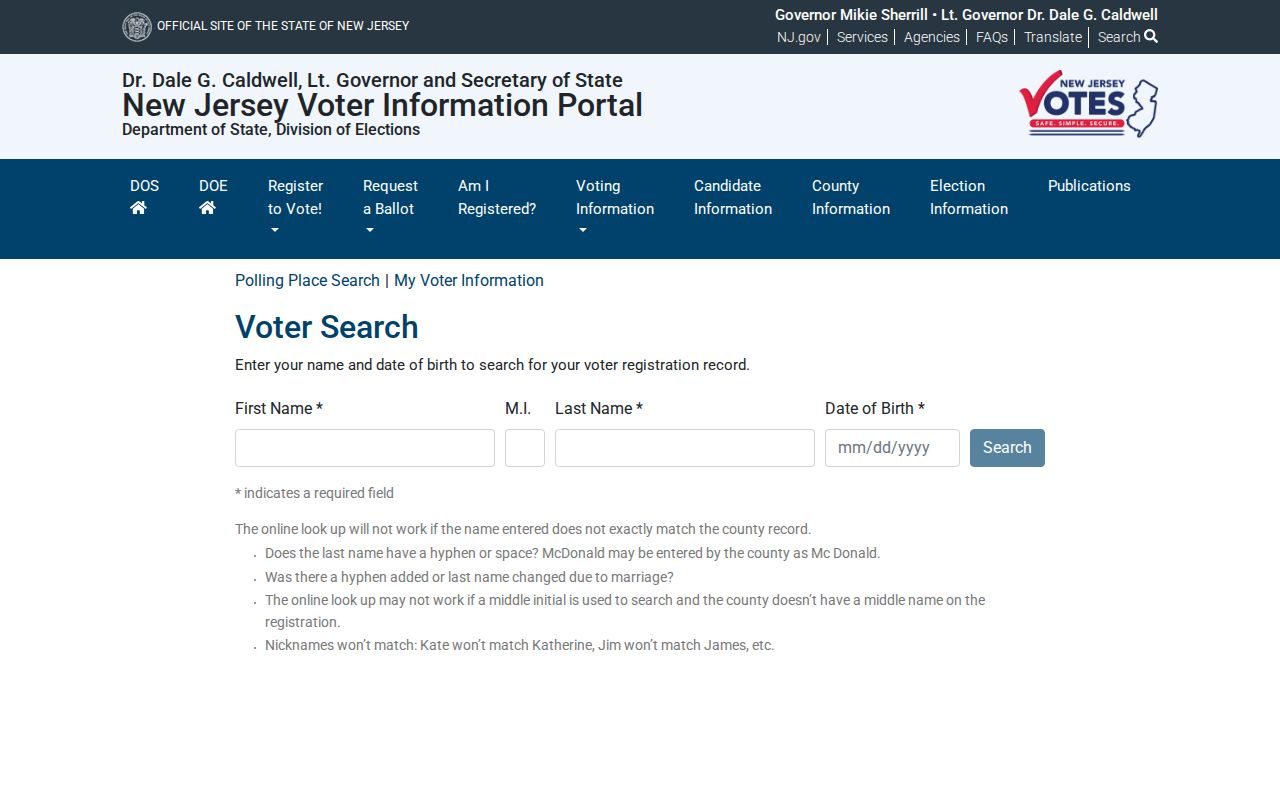
For a county voter-file request, ask the election office about its form, released fields, format, and fee. Signatures stay protected. So do Social Security, driver's-license, and non-driver ID numbers.
Sort New Jersey Resident Same-Name Results
Common names appear across New Jersey's counties. A docket or business filing can belong to someone else entirely. Preserve the spelling found in the source. Then try a middle initial, a former or maiden name, and ordinary spelling variants. Keep county, date, and party role beside each record.
Start with the known municipality and county, not the postal city alone. A property record may add a parcel and mailing address, but the owner can live elsewhere. A license result shows only a city and state. Look for a second independent record. It should share a safe detail such as a date, family link, profession, or legal parcel description.
- Index
- A searchable list of record entries. It can point to a file without showing every page or image.
- Disposition
- The recorded outcome or status of a court case, not just the fact that a case was filed.
- Certified copy
- A copy issued by the record custodian with formal certification. Eligibility and fees depend on the record.
Verify New Jersey Resident Records
Start with the name exactly as known. Write down the municipality or county connected to it. Never let one public result stand in for the person. Property ownership, voter status, court activity, and vital records each belong in their own lane. Working them in order makes a false match easier to spot. Keep the facts separate. The order makes a false match easier to spot.
- Resolve the municipality with the state municipality directory, then use the county directory to locate the right assessor or Clerk/Register. Search the property roll only if ownership or parcel details matter.
- Use the individual voter-status tool to confirm registration status. It is not a name-to-address directory, and a status result does not prove current occupancy.
- Search the court party index by venue, name variant, and date. Save the docket number and read the party role and disposition.
- Use a historical vital index for genealogy, or apply to NJDOH or the local registrar for a current copy only if the requester meets the record's rules.
- Compare two distinct records and contact the custodian when a field is wrong. Do not combine two people merely because their names match.
- Docket
- The court's case number and record of filings or events.
- Index vs image
- An index names or summarizes an entry; the image is the scanned record itself, if the custodian makes it available.
- Genealogy certification
- An informational vital-record document, not a certified identity document.
Skip the certified vital record when a genealogy certification answers the family-history question. A certified copy demands identity and qualifying-relationship proof. Adoption and original birth material follows separate access rules.
New Jersey Vital Records for a Resident
New Jersey splits its vital records between two keepers. The NJDOH Office of Vital Statistics and Registry holds current statewide records, and local registrars keep the events that happened in their own municipalities. Older series sit with the State Archives. The paths are not interchangeable. A current certified copy demands identity proof, a fee, and, for many requests, evidence of your relationship to the person named. Genealogy access runs on separate rules.
Fees are published plainly. The state charges $25 for the initial search, which includes one copy or certification, $2 for each added copy in the same order, and $1 per extra genealogy year searched. Local registrars set their own fees. Mail, an online vendor, the Trenton walk-in counter, a phone vendor, and a local registrar are all listed ordering routes, and processing times are estimates rather than promises. A certified copy is not the same thing as an informational certification, and the NJDOH ordering page spells out the difference.
Two applications cover the territory. The genealogical-record request page and the non-genealogical application page explain which form fits your request. A public index never waives the eligibility rules for an actual copy.
The New Jersey vital-record order page displays the form and its proof categories, and its image helps separate a current application from historical research. Read the live instructions before mailing anything.
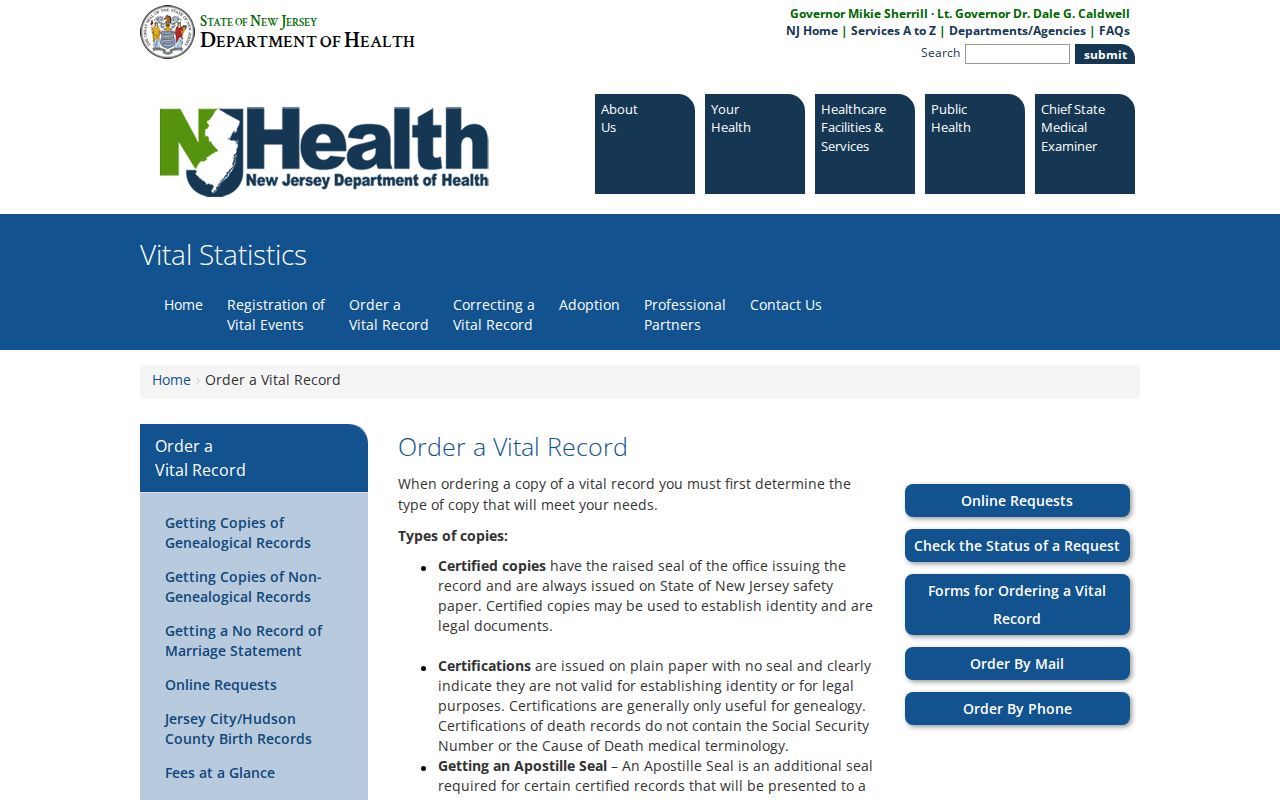
A family-history question often needs an Archives index rather than a current certified copy. The two routes answer different questions and carry different access rules.
New Jersey Heir and Birth-Parent Checks
An heir search works best through an estate file, not a broad person lookup. Start with the county Surrogate's name index or estate index. Then request the will, the administration file, or the estate number. Probate papers can name heirs, fiduciaries, family ties, a date of death, and an address. Protected details may be withheld, though. One caution applies. An estate filing is a lead toward a recorded deed. It is not proof that every named relative received property.
Adoption and birth-parent questions belong in NJDOH's official adoption-record process. That includes its confidential intermediary and registry routes where they apply. Eligibility turns on your status and the governing rules. A protected birth parent should never be traced through unrelated address records. Chasing a former classmate instead? Local library yearbooks, obituary indexes, newspapers, and alumni collections fit that historical hunt far better. Not all school records are public anyway.
New Jersey's historical collections hold wills and inventories from 1670 through 1952. County Surrogate records stay local. Ask an office for an existing file by name, county, and approximate date. Building a family tree is your job, not the clerk's. The State Library and local archives also keep older directories and newspapers. The New Jersey city directory collections show how to read those printed entries.
New Jersey License and Business Checks
When a person is tied to a named business or credential, that source gives the better affiliation clue. The NJ Treasury Business Records Service reports entity status and standing. It also covers annual reports, registered agents, officers or members, and filed documents. A county Clerk or Register may hold a trade-name filing on top of that. So a statewide entity result is never the whole search.
The NJ Division of Consumer Affairs license portal covers both person and business searches. A verification result can list a full name and license number. It can also show a profession, type, status, city, and state. The agency calls it a verification tool for good reason. A public result does not establish a home address.
The Treasury business-records page lays out entity status, filing, and document services. It helps when a name is tied to a public business record. It is not a substitute for a resident record.
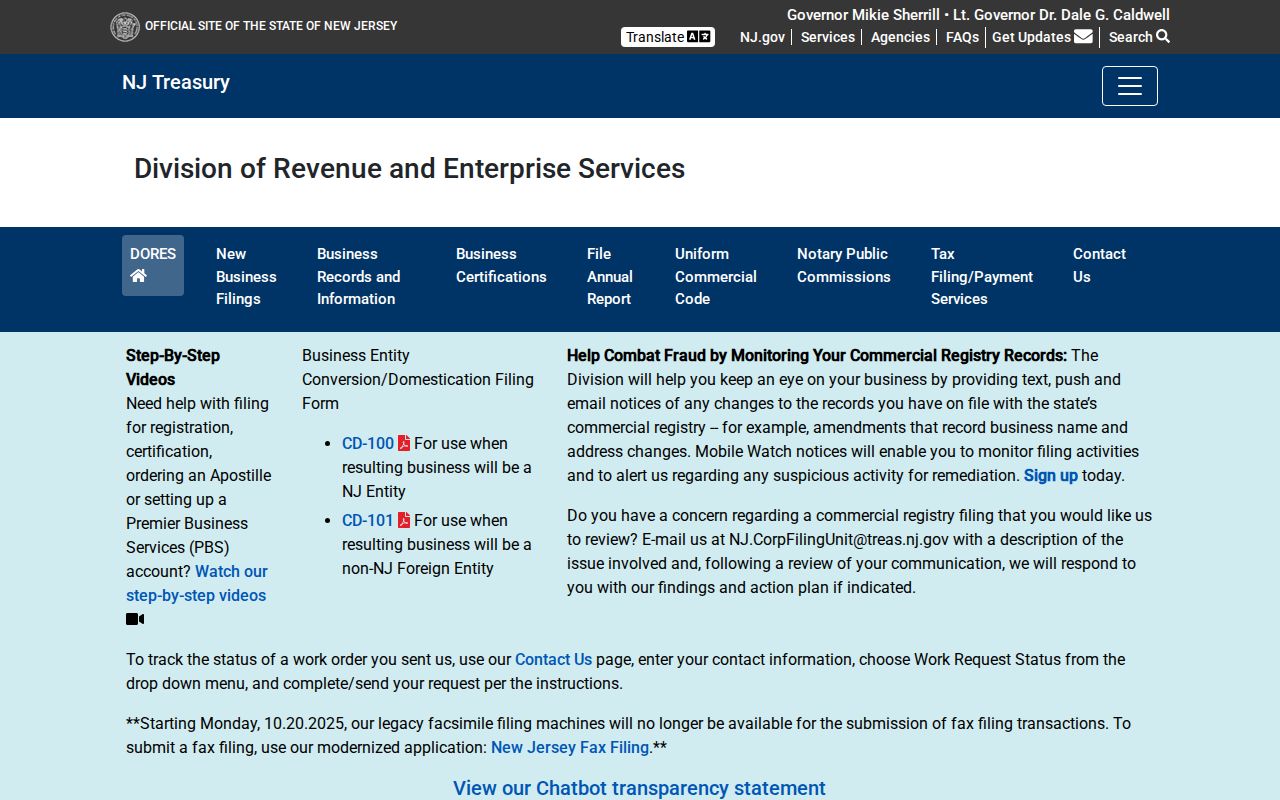
Business filings often name an agent or an office address belonging to the entity itself. Treat that as an organizational link. Keep it separate from where a person lives.
The Consumer Affairs verification page describes its person and business search modes. It also lays out the fields each returns. Its display shows why a license works as a credential check. It is not a household directory.
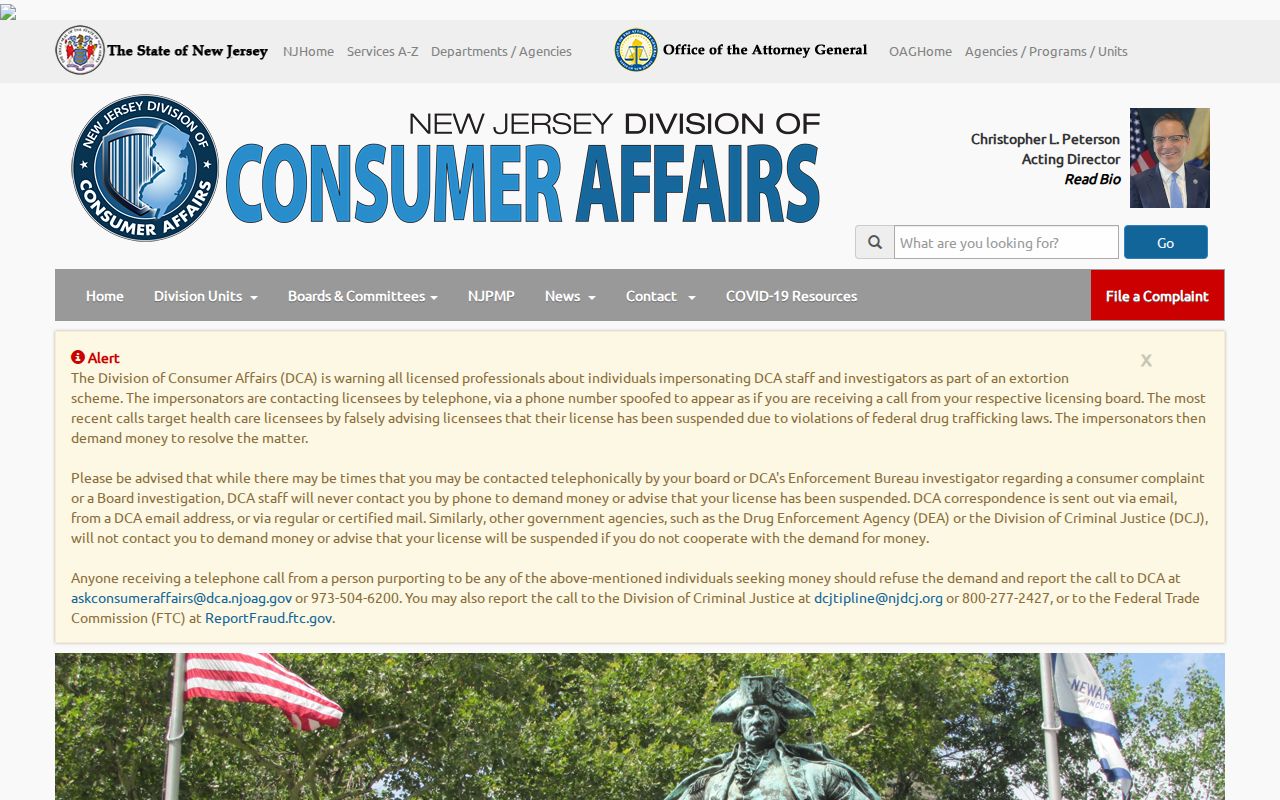
Use the license number and current status the board shows to confirm the credential itself. For older or withdrawn records, ask the licensing agency how its archived file can be requested.
New Jersey Resident Lookup Privacy Rules
New Jersey's Open Public Records Act, N.J.S.A. 47:1A-1 et seq., makes many government records available to the public. Some exemptions apply. Send each request to the records custodian at the agency holding the file, naming the record, the date range, and the format you prefer. The general response period for an available record runs no later than seven business days, though current law sets distinct timing for certain request types. Standard copies run five cents for letter-size pages and seven cents for legal-size, and special service charges or deposits can apply on top of that. Confirm current terms with the custodian before you rely on any fee figure.
Privacy programs shape what a resident lookup in New Jersey will show. The Address Confidentiality Program, N.J.S.A. 47:4-1 et seq., gives eligible survivors and reproductive-health patients or providers a substitute address with mail forwarding. It does not erase a physical address already sitting on a record. Under Daniel's Law, P.L. 2020, c.125, NJGIN redacts owner names from hosted parcel data. The federal Driver's Privacy Protection Act restricts vehicle address data. A blank or redacted field may simply be a privacy safeguard rather than a gap in the records.
Appeals and corrections each follow their own path. For a denied or late OPRA response, the Government Records Council's request guidance lays out the complaint and appeal process. To fix an error, ask the office that created the record. NJDOH, county election officials, assessors, courts, and Treasury each handle their own files.
Lawful use. Use a New Jersey resident lookup for personal, lawful research. Stalking and harassment are prohibited by N.J.S.A. 2C:12-10 and N.J.S.A. 2C:33-4.
Note: A county clerk, registrar, court, or assessor can explain how to correct its own record, and no other agency can amend it for them.