
New Jersey Neighbors by Address
A New Jersey neighbor search starts with the parcels around one known address, then checks which local source can answer the next question. A GIS layer shows boundaries and mapped features. An assessor may identify an owner, and a county voter file may carry a lawful address field, but neither identifies every household member. Voluntary civic groups set their own rules about publishing officers or contact routes. Read each item as a separate record, not a complete roster of the block.
| Source | What It Shows About a Block | Access |
|---|---|---|
| NJGIN or county GIS | Parcel outlines, block and lot, roads, and map layers | Public map; owner names may be redacted |
| Municipal assessor | Owner, mailing and situs fields, tax assessment | Local portal, counter, or records request |
| County voter file | Permitted registration and district fields | Written county request under election rules |
| Municipal civic pages | Published group contacts, boundaries, or meeting details | Municipality-specific website |
| Local-history collections | Past street occupants and block changes | Library or archive holdings vary |
The map can show which parcels touch, while the tax roll identifies an owner of record where that field is available. A deed records a transaction, not the names of all people who lived in the house. A voter file can support address-level research only within its release rules and only for registered voters whose data is not protected. New Jersey has no single public block directory that joins these sources.
Note: A statewide parcel edge is a map clue, so check the local tax map or plat when a boundary or shared tract is unclear.
New Jersey GIS Shows Adjacent Parcels
The NJ Geographic Information Network's Property Explorer and local county viewers can help map the block. Search by address or block and lot, turn on parcel boundaries and road labels, then click a neighboring polygon if the viewer offers an identify tool. Hosted statewide owner names are redacted under Daniel's Law, so use the parcel number to reach a local assessor or county record when owner information is needed.
Layers can include aerial imagery, zoning, flood areas, wetlands, school or legislative districts, service areas, and historic districts. These are location clues. They do not show who lives in a building. The statewide page warns that parcel edges may not align perfectly at county boundaries, and tool buttons vary among local maps.
Do not claim that every New Jersey viewer has a buffer or bulk export button. The research could not confirm one statewide control set; record the actual tool name shown by the local map and note the municipality and block/lot with each result.
New Jersey Neighbors in Voter Files
The state “Am I Registered?” tool is for a voter checking personal status. It is not a search-by-street list. A broader file is held by the county Commissioner of Registration or Superintendent of Elections, with some counties combining those offices. A request should name the specific existing file, fields, county, as-of date, format, and purpose, then ask for the county's form and current fee.
Registered New Jersey neighbors are one slice of a block, and the individual status form is not an address list.
Election statutes and OPRA set different disclosure rules. Signatures, Social Security numbers, driver's-license numbers, non-driver ID numbers, and protected addresses must not be sought as block data. Ballot choices are private. A registration address can be stale, inactive, a mailing address, or covered by a protection program, so it cannot prove who lives next door.
For access instructions, consult the New Jersey Division of Elections and the county office for the address. Election records can have a shorter response period than a standard OPRA request; confirm the current rule before making a request.
Finding Civic Groups for New Jersey Neighbors
New Jersey has no statewide roster of neighborhood associations, HOAs, block watches, faith groups, or civic clubs. Find the municipality first, then check its planning, community affairs, clerk, police, and council pages. A public page may name officers, group boundaries, a meeting location, or a contact form. It does not mean that a private membership list exists or may be shared.
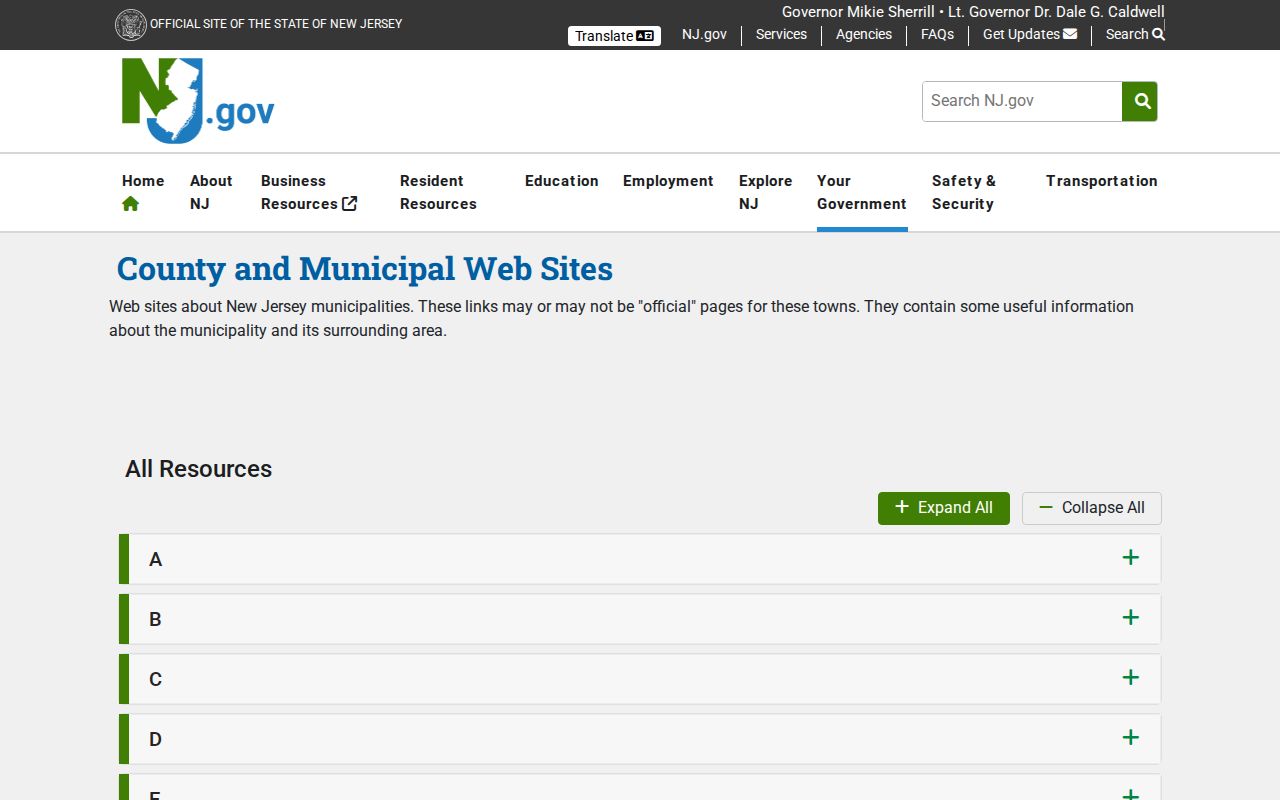
The state's municipality directory is the routing point for identifying local government pages. It helps move a street address to the municipality that may list civic groups, but it is not itself an association directory.
New Jersey neighbors can use a public municipal page to find an open meeting without expecting a private member roster.
The New Jersey municipality directory helps resolve the correct town before a local search. The captured page shows why a statewide neighbor lookup must route to the municipality first.
For an HOA or condominium, look for a recorded master deed, declaration, plat, municipal planning file, or association's published contact page. These can identify an association name or rules; they do not provide a current member roll. Faith and community organizations may hold local history, but rosters remain private unless the organization chooses to publish them.
| Municipal neighborhood page | Check public boundaries, officers, meeting dates, and contact route. |
|---|---|
| HOA or condominium records | Search recorded declarations and plats for the entity name; ask the association about public contacts. |
| Block watch or civic club | Use a city or police page for an open meeting or public contact, not member names. |
| Faith or community archive | Ask about public programs and historical holdings; private rosters need permission. |
Note: A public officer name or meeting location does not mean a full civic or association membership directory is available.
New Jersey Blocks Cross Postal Labels
A street address may carry a postal city that differs from the municipality and county. Before looking for a civic group or assessor, resolve the municipal address and the county that holds the relevant record. A ZIP code can serve many towns, while a street name can cross a boundary or repeat in nearby communities.
State address points include postal place names and alternate street-name fields, and they are updated monthly. The data supports address matching and emergency dispatch work; it is not a list of residents. A historic atlas, tax map, road centerline, or recorded plat can help where a street name or parcel boundary changed over time.
A street-wide owner and record chain belongs to the street directory workflow. Neighbors work is narrower: start with one parcel, check the adjacent lots, and stop where the public record stops.
Official Records Behind New Jersey Neighbors
Official records can be checked with the office that created them. Commercial neighbor tools may combine public extracts with marketing or contributed data; their labels can be stale or mixed between people. Neither category should be treated as a verified list of everyone on a block.
| Source type | What it can answer | What to verify |
|---|---|---|
| County or municipal record | Parcel, filing, assessment, or permitted voter fields | Custodian, date, access rule, and identity match |
| Public civic page | Group contact or meeting information | Current contact and whether a roster is actually public |
| Commercial compilation | Possible lead from mixed data sources | Original source and current accuracy; confirm directly |
If a result matters, follow its link back to the county, municipality, court, library, or group that maintains the record. A report assembled from mixed sources can be wrong even when one underlying entry is current.
Map a New Jersey Block by Parcel
Begin with one known street address and keep a note of its municipality and county. New Jersey parcel keys often rely on block, lot, and qualifier rather than postal address alone. The map can place the parcel, while the local assessor or county Clerk/Register supplies the ownership record. A full street-by-street chain belongs in the New Jersey street directory, where each parcel can be tracked through its own record path.
- Search the NJGIN or county map by address, county, municipality, or block and lot. Save the parcel key and map date.
- Turn on parcel boundaries and road labels, zoom to the block, and click adjacent polygons if the local viewer supports identification.
- Use the parcel number to reach the municipal assessor or county deed index. Keep situs, tax mailing, and legal-description fields distinct.
- Compare the map with a plat or tax map where a lot touches an alley, rail line, river, or shared condominium tract.
A selected polygon shows mapped land, not people at the home. If an owner name is redacted in the statewide layer, use the official local source rather than trying to reconstruct a protected name from unrelated data.
Privacy Limits When Researching New Jersey Neighbors
A parcel record does not list every resident, non-owner occupant, child, guest, or household member. Utility customer data and motor-vehicle address data are not public lookup tools. New Jersey's Address Confidentiality Program provides an approved substitute address for qualifying participants, but it cannot remove an address already recorded. NJGIN owner-name redaction under Daniel's Law is also a protection, not a gap to work around.
Use the county or town custodian for a specific record request and respect its access limits. An OPRA request should identify an existing record rather than ask an agency to create a neighbor list. Personal details from one source should not be copied into a public roster, and an association's private member file is not a public record simply because the organization has a public contact page.
Lawful use. Use New Jersey neighbor information for a personal, lawful purpose. Stalking and harassment are prohibited by N.J.S.A. 2C:12-10 and N.J.S.A. 2C:33-4.